Public Safety & Courts
Mentor Citizens Police Academy returns Sept. 28 with eight-week overview of local law enforcement
Classes cover use-of-force scenarios, criminal law and specialty units, but researchers question whether such programs produce real oversight or mainly build goodwill.
By Staff · August 20, 2026
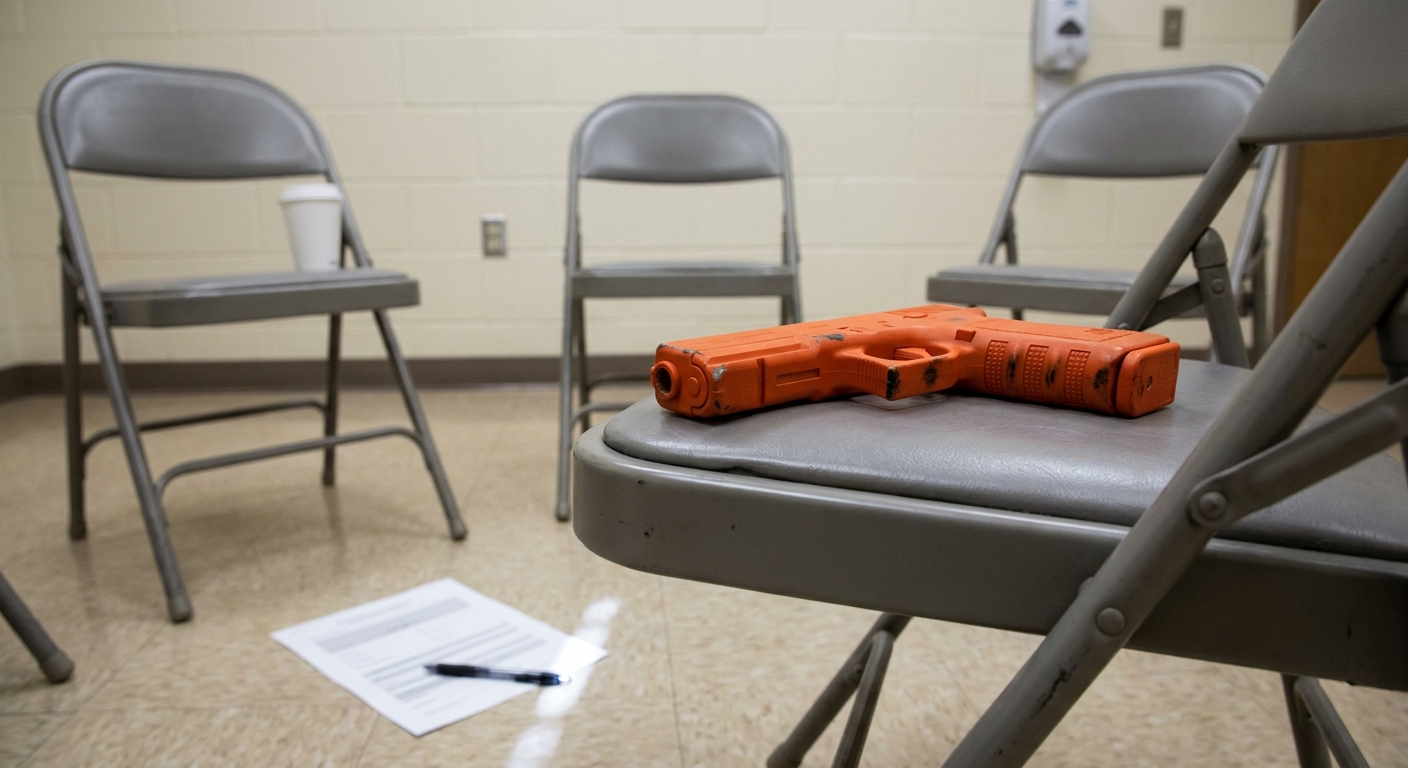
On Sept. 28, Mentor residents and business owners will be invited inside the police department for an eight-week look at how officers make decisions — including when to use force. The Mentor Police Department's 2026 Citizens Police Academy runs through Nov. 16, with Monday evening classes from 6 to 9 p.m. at the Mentor Police Department, 8500 Civic Center Blvd. The free program promises instruction in criminal law, road patrol, specialty units and use-of-force decision-making.
For residents weighing whether to enroll, the central question is not whether the academy will make police work look difficult. It is whether participants will receive enough information to examine how the department uses power, investigates complaints and holds officers accountable — or whether the program will offer a carefully managed view designed primarily to build goodwill.
Research on citizen police academies finds that they can improve participants' understanding of police work and often increase trust in police. But researchers also describe them largely as public- and community-relations programs, with limited evidence that they produce meaningful oversight, accountability or crime prevention. Many participants already hold favorable views of law enforcement before they enroll.
That makes the use-of-force session perhaps the clearest measure of whether Mentor's program offers substantive transparency or managed outreach.
Citizen police academy classes commonly cover response-to-resistance standards, de-escalation, defensive tactics, firearms safety or demonstrations, and use-of-force reporting. They often put participants through mock traffic stops, building searches, force simulations, interactive judgment training and crisis-negotiation scenarios. Such exercises can give residents a firsthand sense of the pressure officers face in fast-moving encounters. They cannot, on their own, answer the harder questions: Are department policies followed? How are complaints investigated? What happens when an officer's decision is found unjustified?
If the program lets participants experience split-second simulations without explaining the accountability system governing real encounters, it risks building sympathy for officers without giving residents the tools to judge whether meaningful oversight exists.
Mentor has taken steps the department describes as transparency measures. In 2025, it launched Citizen Connect, an interactive, daily updated website that lets residents search police incident types by date and location. The department's 2025 annual report called it a transparency tool meant to give the public more detail about calls for service and officer-initiated incidents.
The department also received two Ohio Office of Criminal Justice Services grants totaling $91,107.50 in August 2026 to buy 40 Motorola WatchGuard V300 body cameras. Mentor says the cameras are intended to record 100% of police-civilian interactions. A Mentor Police Department spokesperson said the new body cameras serve "for the purpose of transparency, accountability, and to serve as a valuable resource for officer complaints and police investigations."
Those tools may provide more information than residents had before. But neither incident mapping nor body cameras directly gives the public disaggregated use-of-force data, complaint-investigation outcomes, disciplinary records or information about independent review of serious incidents.
Police-accountability experts describe real oversight as including bodies able to compel records and testimony, public findings by default, routine release of disaggregated data on stops, complaints, force and discipline, and independent power to investigate. Transparency guidance recommends that citizens ask whether oversight bodies can compel evidence, whether findings are public by default, what specific data is published routinely, whether complaint and discipline outcomes are reported in aggregate, and whether independent review exists for serious incidents.
The academy's use-of-force instruction gives participants an opportunity to ask directly: Does Mentor publish force data by category? How many force incidents occurred last year? How many complaints were filed, and how were they resolved? Who investigates force complaints? Are findings public? Do serious incidents receive independent review?
Residents can also judge the academy by how it handles difficult subjects, including racial disparities in stops, complaints involving particular officers, and independent review. Academics who surveyed citizen police academy coordinators have found that recruitment can favor community elites, while Black residents are underrepresented in many programs. If questions about those subjects bring specific answers, records and clear explanations, the program can deepen public understanding. If the discussion mainly turns back to officer safety and the dangers of the job, participants should recognize the limits of the access being offered.
A program built for informed civilian oversight would send graduates to City Council meetings ready to ask pointed questions, request specific records and spot official explanations that sidestep accountability. A program functioning mainly as public relations can instead turn participants into unofficial department ambassadors — people who point to the difficulty of police work to deflect criticism rather than independently test police claims.
The academy comes as the department continues to broaden its public outreach. Its Aug. 1, 2026, Safety Forces Open House invited residents to tour police and fire facilities, watch demonstrations and meet officers and firefighters. The event began about five years earlier as a recruiting tool before growing into a broader community-outreach effort.
Ken Gunsch has been Mentor's police chief since June 1, 2019. Gunsch joined the department in 1993 and rose through the ranks from patrol officer to detective, sergeant, lieutenant and captain. The department's 2025 annual report said reported crime remained relatively consistent, with theft down 25%, adult arrests down 7% and drug arrests up 26%.
Mentor has not faced the kind of recent, high-profile force controversies or protests that have driven accountability debates elsewhere. But the absence of a visible crisis does not settle the question of whether oversight is strong enough. A 2023 State Employment Relations Board fact-finding report documented an impasse between the city and the Ohio Patrolmen's Benevolent Association over proposed changes to sergeants' and lieutenants' schedules from 10-hour to 12-hour shifts, rank differentials, acting-lieutenant pay and minimum supervisory staffing levels.
Eligibility requires applicants to be at least 18, live in Mentor or own a business there, and pass a background check. Applicants cannot have pending criminal charges, felony convictions or past or pending civil litigation against the city or other government entities. Misdemeanor convictions are reviewed case by case.
Applications are accepted first-come, first-served. Residents may apply in person, by U.S. mail or by email to Officer Dan Radigan, the department's Citizens Police Academy coordinator, at [email protected]. The Mentor Police Department can be reached at 440-974-5760.
Residents who attend should ask for the department's written use-of-force policy; the number and categories of force incidents in the previous year; complaint totals and outcomes; the process for reviewing serious incidents; and what information the department releases routinely, and in what format. The academy's value for accountability depends on whether participants treat it as an opportunity to press for answers and transparency, or accept it as a curated experience that leaves the hardest questions unasked.