State News
What Lake County drivers actually save under Ohio's 90-day gas tax holiday
For a Mentor driver who fills up once or twice a week, the suspension is worth a few dollars weekly, while electric and hybrid owners get no break.
By Staff · October 12, 2026
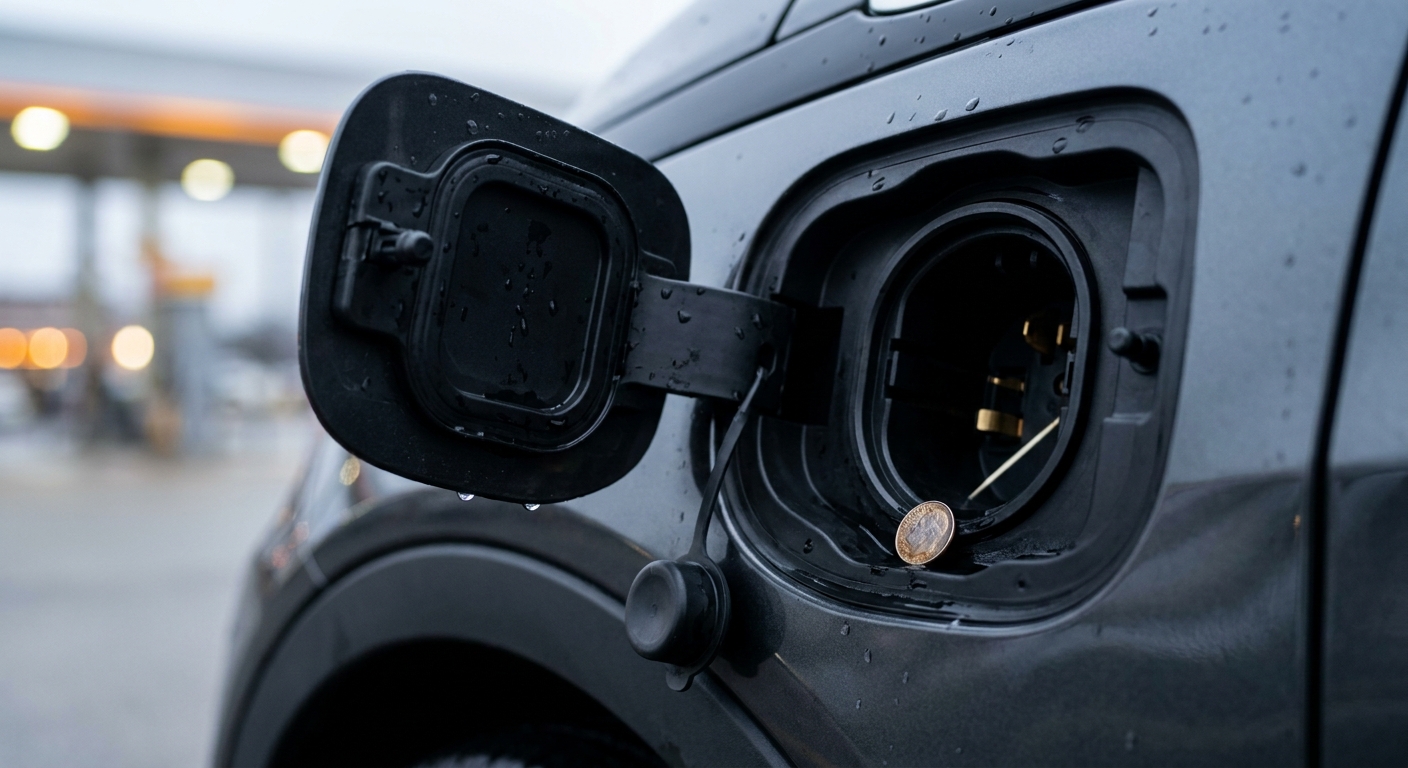
The 90-day gas-tax holiday Gov. Mike DeWine signed as Substitute House Bill 519 on Oct. 1 is worth about $5.77 on a 15-gallon fill-up of gasoline and about $70.50 on 150 gallons of diesel — a few dollars a week for a driver who fills up once or twice at a Mentor station, and exactly nothing for the lakefront neighbor who plugs in instead.
Under the suspension, the state gasoline tax drops from 38.5 cents a gallon and the diesel tax from 47 cents a gallon to one-hundredth of a cent — effectively zero, not the one-cent figure often cited. The reduced rate runs from 12:01 a.m. Oct. 4 through 11:59 p.m. Jan. 2, 2027, with the full rates resuming at 12:01 a.m. Jan. 3. The federal fuel tax is unchanged.
Licensed fuel sellers must pass the full reduction through to pump prices, and failing to do so may be treated as an unfair or deceptive act.
What drivers actually get
The math is straightforward: 38.5 cents back on every gallon of gas, 47 cents on every gallon of diesel. By the state's own example, a 15-gallon gasoline fill-up is about $5.77 cheaper, while 150 gallons of diesel saves about $70.50. Against AAA's Oct. 9 statewide average of about $3.87 a gallon for regular, that works out to about a dime back on every dollar — a shave off the top, not a free tank.
In the holiday's first days, the savings didn't even land in full. The Cleveland-area average fell only about 10 cents overnight — from $4.19 to $4.09 — because stations were still selling fuel they had bought before the tax cut took effect.
For a Mentor driver filling a tank once or twice a week along Route 20, Route 2, or Heisley Road, that comes to a few dollars a fill — a couple of dollars a week in the driveway, where the $725 million headline shrinks to pocket change.
Who's left out
The break reaches only the people who pump gas or diesel. The 90-day suspension offers no relief to electric-vehicle or hybrid owners, who pay separate annual registration fees rather than a per-gallon fuel tax.
Those fees — $200 for all-electric vehicles, $150 for plug-in hybrids, and $100 for conventional hybrids — keep coming due straight through the holiday.
Who pays — and who takes credit
The suspension carries an estimated cost of about $725 million in lost fuel-tax revenue. That sum is covered by a transfer from state reserve funds — the general-fund surplus — rather than from transportation or ODOT money. ODOT's operating balance of roughly $1.6 billion to $1.8 billion was already committed to planned construction and other projects, so state officials said there was no available surplus in transportation funds to draw on.
The transfer is designed to replace the revenue lost during the suspension and keep road projects funded, so scheduled local roadwork is not cut — but the money is still taxpayers' own surplus being spent, not new money from outside.
State Sen. Jerry Cirino, the Kirtland Republican whose Senate District 18 covers all of Lake County, voted for the measure, which passed the Senate 26-5 and the House 78-16 on Sept. 30. His office has emphasized that the state's Rainy Day Fund would not be used and that highway projects and local governments would remain fully funded, and it has cast the suspension as saving Ohioans more than $725 million at the pump.
Cirino framed the approach as returning money to taxpayers. "We're trying to be wise about how we do this," he said. "We're going to use the state's surplus to take some of the burden off of Ohioans right now. Senate Republicans have always been in favor of lessening the tax burden because we believe more of your money should stay in your wallet."
Both major-party candidates for governor had called for a gas-tax holiday before it was enacted, and the measure was approved and signed weeks before the November general election.
For a Mentor driver, the break is a few dollars a week. For a lakefront neighbor who plugs in, it's zero. And the tab is being paid with taxpayers' own surplus.